
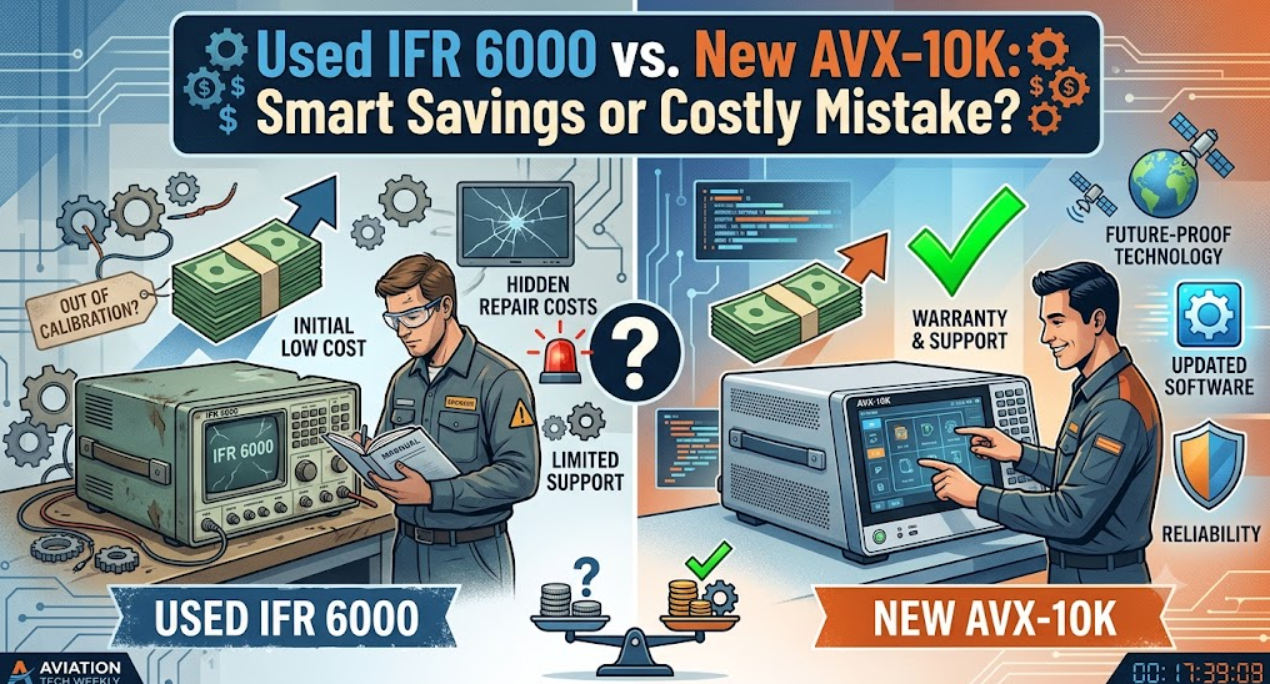
Used IFR 6000 vs. New AVX-10K: Smart Savings or Costly Mistake?
If you are comparing the IFR 6000 vs. Viavi AVX-10K for your flight line operations, you already know how critical reliable testing is. For years, the Viavi (formerly Aeroflex) IFR 6000 has been the trusty, go-to workhorse on the tarmac for testing Transponders, TCAS, DME, or ADS-B.
But equipment ages, shops expand, and eventually, every manager hits the same fork in the road: Should we pick up a used or refurbished IFR 6000 to save some cash, or drop the money on the new Viavi AVX-10K?
At first glance, grabbing a used unit feels like an easy win for your budget. But is it actually a smart financial move, or are you just buying a headache down the road? Let’s break down how these two stack up in the real world.
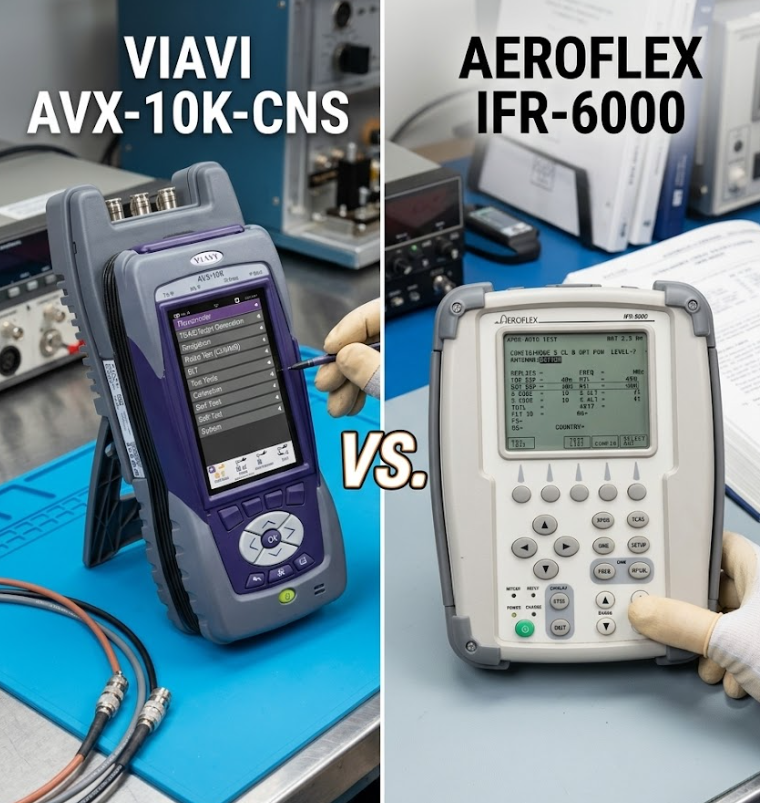
Table of Contents
The Catch: One Box vs. Two Boxes
Before touching the price tag, you have to look at how these tools actually get used on the ramp.
The IFR 6000 is built for pulse-based systems. It tests your transponders and collision avoidance, and it does it well. But the moment a job calls for NAV/COMM testing—like checking VOR, ILS, or VHF radios—the IFR 6000 can’t help you. You have to drag out a second box, the IFR 4000.
(And if you’re maintaining military airframes that require TACAN, you’d need the IFR 6015 variant instead.)
This is where the Viavi AVX-10K flips the script. Viavi built the AVX-10K to put an end to the “two-box shuffle.” With the right software setup, one single AVX-10K replaces both the IFR 6000 and the IFR 4000 combined.
Side-by-Side Comparison: IFR 6000 vs Viavi AVX-10K
| What Matters on the Ramp | Used / Refurbished IFR 6000 | New Viavi AVX-10K |
|---|---|---|
| Testing Scope | Transponder, DME, TCAS, ADS-B only | All-in-One: XPDR, TCAS, DME, ADS-B + NAV/COMM |
| Gear to Haul | Need 2 separate boxes for full flight line checks | 1 compact box handles everything |
| Controls & Display | Old-school physical buttons, monochrome screen | Modern color touchscreen, clean user interface |
| Paperwork & Data | Manual notes or basic exports | Automatic digital reports synced to the cloud via StrataSync |
| Upfront Cost | Lower: Keeps immediate spending down | Higher: Requires a bigger chunk of capital upfront |
| Maintenance Risk | Older parts, potential calibration drift, limited OEM support | Full factory warranty, active software updates, zero support headaches |
When Buying a Used IFR 6000 Actually Makes Sense
Going pre-owned isn’t inherently a bad call. In fact, it’s usually the right move if:
- Your budget is rock-bottom: If cash flow is tight right now and you just need a reliable unit to get through the season, a certified pre-owned IFR 6000 delivers immediate capability without breaking the bank.
- Your techs hate changing their routine: Everyone on your team already knows the IFR 6000 layout by muscle memory. There’s zero learning curve and no lost time spent on retraining.
- You already have a working IFR 4000: If you’ve already got a perfectly fine unit for NAV/COMM, you don’t necessarily need an all-in-one box right now.
Where the Used Route Becomes a “Costly Mistake”
The low sticker price on a used IFR 6000 can be deceptive. The real costs usually creep up on you later:
- Double the Calibration Fees: Owning two older boxes (IFR 6000 + IFR 4000) means paying for two annual calibrations, sending two units out for service, and dealing with double the downtime.
- Flight Line Fatigue: Lugging two heavy cases, multiple antennas, and cables across a hot tarmac adds up. It slows your techs down and costs you billable hours over time.
- Aging Hardware Risks: Older internal components drift out of tolerance faster. One unexpected repair on an out-of-warranty box can instantly wipe out whatever money you saved on the purchase price.
- Paperwork Bottlenecks: Modern MROs are moving fast toward paperless operations. Manually logging test results from a legacy box is a slow, error-prone hassle during audits.
The Final Call
So, which path should you take?
- It’s SMART SAVINGS if: You’re running a smaller operation, already have NAV/COMM covered, need a quick replacement, and want to keep your immediate CAPEX as low as possible.
- It’s a COSTLY MISTAKE if: You run a busy shop, want your techs moving faster on the ramp, need automated digital logging, and want a tool that will stay supported for the next 10 to 15 years.
When evaluating the IFR 6000 vs Viavi AVX-10K, the decision ultimate comes down to your shop’s long-term operational goals. So, which path should you take?