




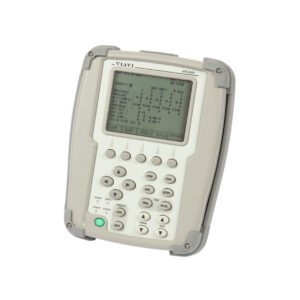
Aeroflex IFR 6000 Transponder TCAS Test Set
The Aeroflex IFR 6000 (now under the Viavi Solutions brand) is a compact, lightweight, and completely portable flight-line test set engineered for fast, comprehensive verification of aircraft transponder, TCAS, and DME systems. Designed specifically for field technicians who demand precision and speed, this all-in-one instrument allows the user to perform testing directly through an over-the-air directional antenna or via a direct coaxial coupling.
Housed in a ruggedized, ergonomically balanced hand-held enclosure, the Aeroflex IFR 6000 delivers laboratory-grade RF diagnostic performance. It is an indispensable asset for commercial airline hubs, defense maintenance divisions, and global avionics Aircraft Maintenance, Repair, and Overhaul (MRO) centers focused on minimizing aircraft-on-ground (AOG) troubleshooting times.
Streamlining Critical Avionics Regulatory Compliance
Maintaining absolute system precision for transponders, Traffic Alert and Collision Avoidance Systems (TCAS), and Distance Measuring Equipment (DME) is vital to preventing airspace incidents and verifying transponder signal data integrity. Regulatory aviation bodies like the FAA and EASA enforce mandatory periodic inspection cycles to ensure transponder and situational awareness safety gear are perfectly calibrated.
The Aeroflex IFR 6000 provides testing crews with definitive, automated verification routines. Powered by a high-speed internal RF digital processor, the test set accurately simulates interrogations and calculates responses with exceptional repeatability. This comprehensive automation allows shops to easily complete mandatory FAR Part 43 Appendix F testing alongside European safety audits, ensuring airframes clear inspection quickly and with complete traceability.
Key Product Features and Field Advantages
1. Multi-System Mode Capabilities
The standout operational benefit of the Aeroflex IFR 6000 is its multi-functional versatility. Technicians no longer need to carry separate, bulky boxes onto the flight line to check different transponder components. The unit supports comprehensive diagnostic profiles across multiple platforms, including:
-
Transponder (Modes A, C, and S): Evaluates pulse parameters, power, frequency, and addresses, with extensive NextGen support for ADS-B Out (1090 MHz) and UAT (978 MHz) configurations.
-
DME (Distance Measuring Equipment): Simulates a ground station transponder across all 252 channels, checking track, lock, and pulse echo accuracy.
-
TCAS I, TCAS II, and TAS: Mimulates target aircraft behaviors, allowing workshops to safely run realistic collision scenario assessments to verify cockpit alert flags.
2. Intuitive User Interface & Single-Hand Operation
The front panel is built around a large, high-visibility 5.7-inch color LCD display that remains perfectly legible under direct sunlight or low-light hangar conditions. Designed with an incredibly logical layout, the tactical navigation keypad features dedicated hotkeys for fast mode switching. Guided by an easy, step-by-step menu tree, a single operator can rapidly toggle between complex tests, drastically reducing required training and field setup loops.
3. Highly Durable & Built for the Flight Line
Avionics tools frequently face harsh conditions, from high-altitude winds to humid conditions on open tarmacs. The Aeroflex IFR 6000 features a fully ruggedized, impact-resistant outer shell with heavy-duty rubberized corner guards. Its lightweight construction minimizes user fatigue during long diagnostic cycles, while the long-life internal lithium-ion battery package ensures reliable, continuous operation without tethering to standard terminal wall grids.
4. Advanced Data Logging and USB Interfacing
The tester features built-in storage to record pass/fail results and comprehensive parameter metrics during testing. Crews can export captured logs via a built-in USB interface directly to a standard computer system. This makes generating customer compliance certificates and archiving asset calibration histories completely seamless, removing the risk of manual data-entry errors.
Technical Performance Specifications
To provide engineering and quality control departments with the exact benchmarks needed for equipment acquisition, here is the technical breakdown for the Aeroflex IFR 6000:
| Test Mode / Parameter | Operational Signal Capability | Measurement Accuracy / Range |
| Transponder Frequency | 1090 MHz (Reply) / 1030 MHz (Interrogator) | ± 10 kHz accuracy spec |
| RF Output Power Range | Direct: -40 to -85 dBm / Antenna: -45 to -80 dBm | ± 1.5 dB measurement resolution |
| DME Mode Range Simulation | 0 to 400.0 nautical miles | ± 0.01 NM tracking accuracy |
| DME Ground Speed Simulation | 10 to 10,000 knots | ± 1% accuracy baseline |
| TCAS Target Distance | 0.2 to 100 nautical miles | Highly precise closing-rate profiling |
| ADS-B Compliance Testing | 1090ES DF17 / DF19 & UAT verified | Full data string validation |
-
Environmental Rating: Engineered to meet MIL-PRF-28800 Class 2 requirements for robust shock, vibration, and thermal exposure protection.
-
Internal Battery Run-Time: High-capacity internal rechargeable assembly provides over 8 hours of continuous, unassisted field test capability.
-
Power Adapter Input: Universal charging compatibility covering 100-240 VAC at 50 to 60 Hz frequencies, providing global hangar versatility.
Primary Applications in Aviation Maintenance
The Aeroflex IFR 6000 is a highly flexible avionics platform suited for various flight line support protocols:
-
Mandatory Biennial Transponder Auditing: Easily satisfies the strict regulatory checking parameters required for transponder certification before clearing commercial or regional craft for service.
-
NextGen ADS-B Out Validation: Instantly decodes and verifies extended squitter data, confirming the aircraft is broadcasting precise position information to ground traffic systems.
-
Flight Line Collision Avoidance Tuning: Allows maintenance crews to isolate whether a cockpit TCAS failure comes from external antenna faults, broken wiring, or interior computational processing breakdown.
Frequently Asked Questions (FAQ)
Can the Aeroflex IFR 6000 be upgraded to support newer transponder testing requirements? Yes. The software-driven architecture allows firmware updates through its USB port to expand capabilities as global aviation agencies introduce new NextGen surveillance and ADS-B protocols.
What is the suggested calibration period for the Aeroflex IFR 6000? To remain compliant with manufacturing guidelines and standard aviation quality audits, a professional laboratory recalibration is highly recommended every 12 months using standards traceable to NIST.
Reviews
There are no reviews yet.