




Barfield DPS1000
The Barfield DPS1000 is an Automated Digital Air Data Tester engineered as a next-generation, flight-line ready solution for testing and calibrating aircraft pitot-static systems. This high-precision dual-channel air data test set is fully compliant with strict RVSM (Reduced Vertical Separation Minimum) standards, making it a critical asset for modern aviation maintenance facilities.
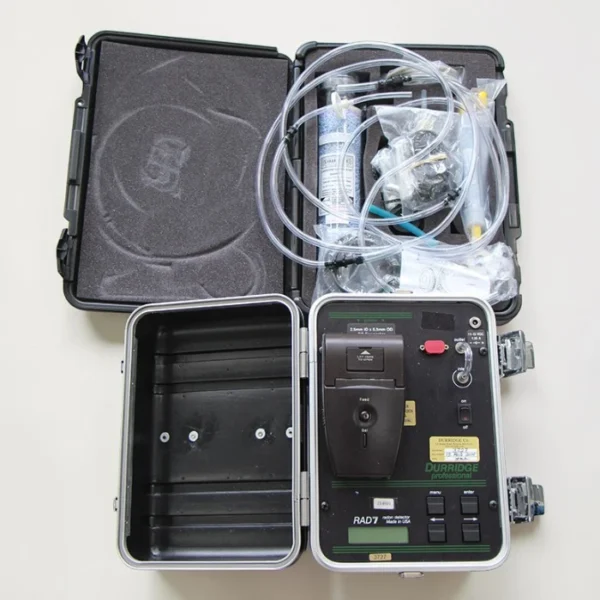
Housed in a ruggedized, portable enclosure, the Barfield DPS1000 incorporates automated control technology to simplify complex field diagnostic cycles. It is a highly trusted calibration tool utilized worldwide by commercial airlines, Aircraft Maintenance, Repair, and Overhaul (MRO) centers, military support hangars, and aerospace testing facilities.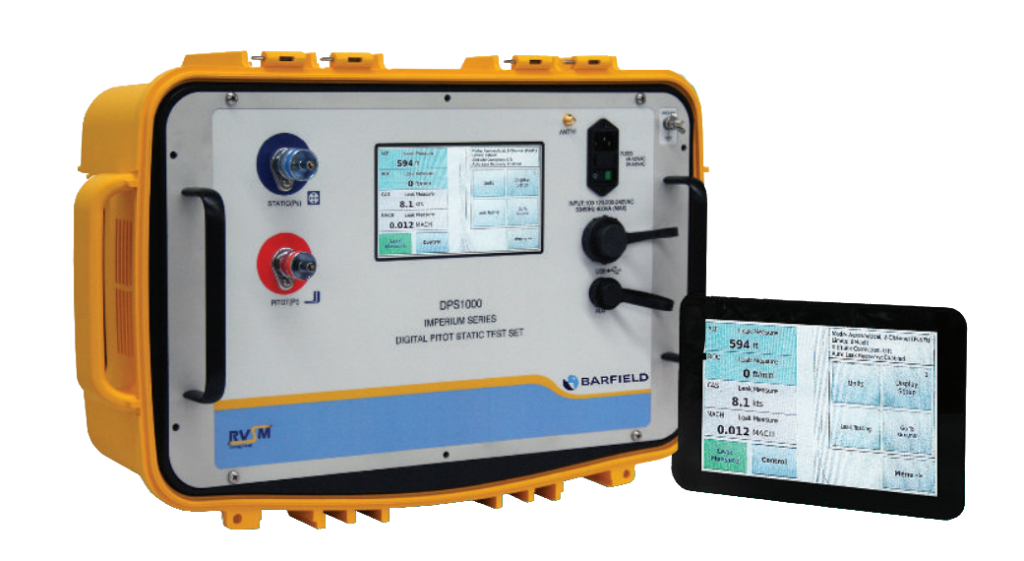
The Strategic Importance of RVSM Verification
Operating safely within restricted RVSM airspace corridors requires absolute instrumentation precision from every airframe. Because modern aircraft cruise with a vertical separation of just 1,000 feet, any calibration drift or error within the altimetry system could compromise flight safety.
The Barfield DPS1000 provides maintenance engineers with absolute validation certainty. Driven by a state-of-the-art digital control processor and highly stable transducer architecture, the system accurately simulates altitude and airspeed metrics with exceptional repeatability. This reliable precision allows workshops to easily complete mandatory structural inspections and comply with international civil aviation audits.
Key Product Features and Field Advantages
1. Fully Automated Dual-Channel Control System
The system features two independent, isolated pneumatic control channels for the Pitot (Pt) and Static (Ps) loops. Both channels operate simultaneously and are managed by an advanced software-driven internal pump system. This sophisticated design allows technicians to simulate complex, real-world flight profiles—such as maintaining a targeted knots airspeed while dynamically scaling or descending altitudes—with precise accuracy.
2. Wireless Remote Control Interface (Wi-Fi Enabled)
One of the standout operational benefits of the Barfield DPS1000 series is its modern wireless connectivity. Technicians can control the entire testing sequence via a rugged, hand-held tablet interface utilizing a secure Wi-Fi connection. This wireless freedom allows a single operator to sit comfortably inside the aircraft cockpit to monitor instrument reactions in real-time, while the main tester remains safely situated on the flight line floor. This drastically cuts labor costs by enabling single-operator execution without dragging long, cumbersome control cables into the flight deck.
3. Programmable Aircraft Instrumentation Protection (Safety Limits)
Sensitive cockpit instrumentation can easily be ruined by sudden, uncontrolled pressure spikes or extreme vacuum rates. Barfield mitigates these costly risks by embedding customizable Safety Limits directly into the operating system. Technicians can pre-program safe operational boundaries for airspeed, altitude, and vertical speed rates matching the specific aircraft profile. If an input error occurs, the internal computer instantly halts the command, safely venting or stabilizing the pressure loop to safeguard the aircraft’s critical avionics hardware.
4. Heavy-Duty Built-in Pressure and Vacuum Pumps
Forget the logistical headache of dragging heavy external gas cylinders or relying on unstable hangar supply lines. The Barfield DPS1000 comes fully integrated with internal, heavy-duty electric pressure and vacuum pumps. These high-capacity pumps are engineered for low-noise output, rapid pneumatic response, and an extensive maintenance-free lifecycle, making the entire field test set completely self-sufficient.
Technical Performance Specifications
To provide your technical procurement and engineering teams with the exact metrics required for asset onboarding, here is the performance breakdown for the Barfield DPS1000:
| Test Parameter | Operational Control Range | Measurement Accuracy Spec |
| Altitude Control | -3,000 feet up to 55,000 feet | Down to ± 2 feet at sea level |
| Airspeed Control | 10 knots up to 500 knots | ± 0.1 knots tracking resolution |
| Vertical Speed (VSI) | 0 to ± 6,000 feet per minute | Highly precise for rate-of-climb profiles |
| Mach Simulation | Automatically calculated via Pt/Ps | Full compatibility for subsonic profiles |
-
Transducer Technology: Employs advanced solid-state silicon sensors that deliver impeccable long-term stability and virtually eliminate temperature-induced calibration drift.
-
Power Parameters: Universal auto-selecting input matching 90-260 VAC at 47 to 440 Hz frequencies, adapting perfectly to standard aircraft Ground Power Units (GPU) or global hangar wall outlets.
-
Pneumatic Multi-Unit Scaling: Measurements can be configured in multiple standard profiles, including feet, meters, knots, km/h, mbar, inHg, psi, and kPa.
Primary Applications in Aviation Maintenance
The Barfield DPS1000 is a highly versatile, multi-purpose platform essential for an array of specialized hangar routines:
-
Mandatory RVSM Recertification: Satisfies the strict 24-month pitot-static regulatory testing parameters dictated by global aviation authorities for aircraft operating in RVSM tracks.
-
System Leak Rate Testing: Built-in precision timing functions allow engineers to accurately calculate micro-leak counts within internal airframe plumbing runs to guarantee structural integrity.
-
Avionics Loop Diagnostics: Empowers maintenance crews to quickly isolate whether an air-data reading anomaly originates from external probe blockages, internal line leaks, or a computational error inside the Air Data Computer (ADC).
Frequently Asked Questions (FAQ)
Is the Barfield DPS1000 compatible with helicopters and regional transport planes? Yes. Thanks to its wide control envelope and high low-speed accuracy starting down at 10 knots, the system is fully compatible with light general aviation aircraft, rotary-wing helicopters, and commercial regional transport airframes.
What is the suggested calibration interval for the DPS1000? To satisfy manufacturing guidelines and standard aviation quality audits, a professional laboratory recalibration is highly recommended every 12 months using primary standards traceable directly to NIST.

Reviews
There are no reviews yet.